Home of Senior Softball-USA and Senior Softball World Championships

Oct. 1, 2026
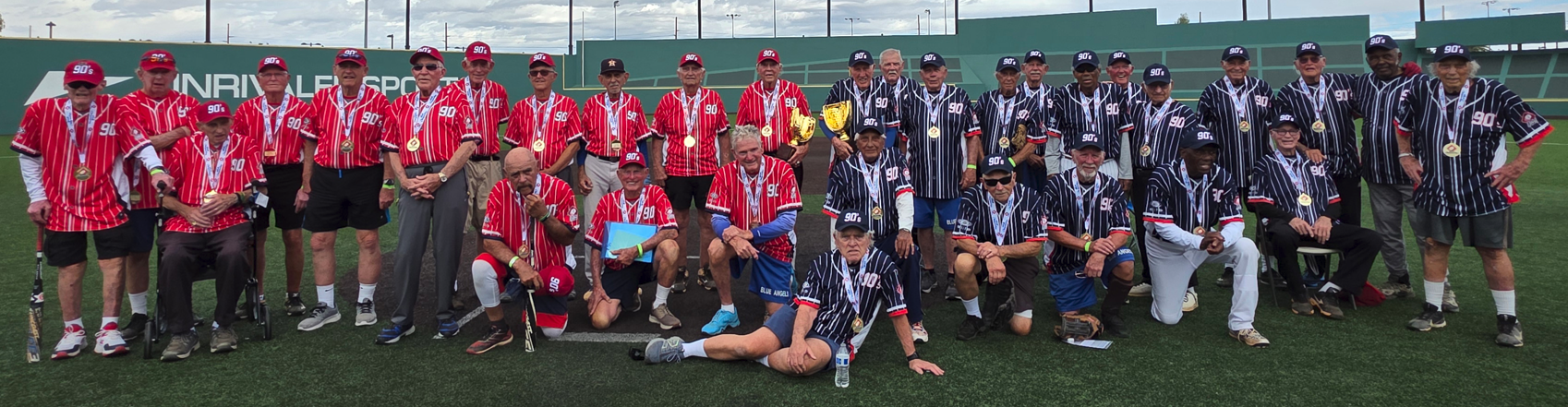
Both the East (red jerseys) and West (blue jerseys) 90s teams won two 90s games in the past four years. The 2026 West 90s Team broke the tie, winning the fifth annual event at the 2026 World Championships.
A buzz of anticipation rolled through crowded stadium seats as Art Barnes of Littlestown, Pa., stepped into the batter’s box on a recent sunny morning in Las Vegas.
Though Barnes’ hat and shirt both read “90s,” his swing looked like it belonged to someone much younger. Maybe someone 80. Or 75 even.
These days, it’s hard to tell with senior softball players. They keep playing not only because they love the game and the team camaraderie, but because it helps keep them young.
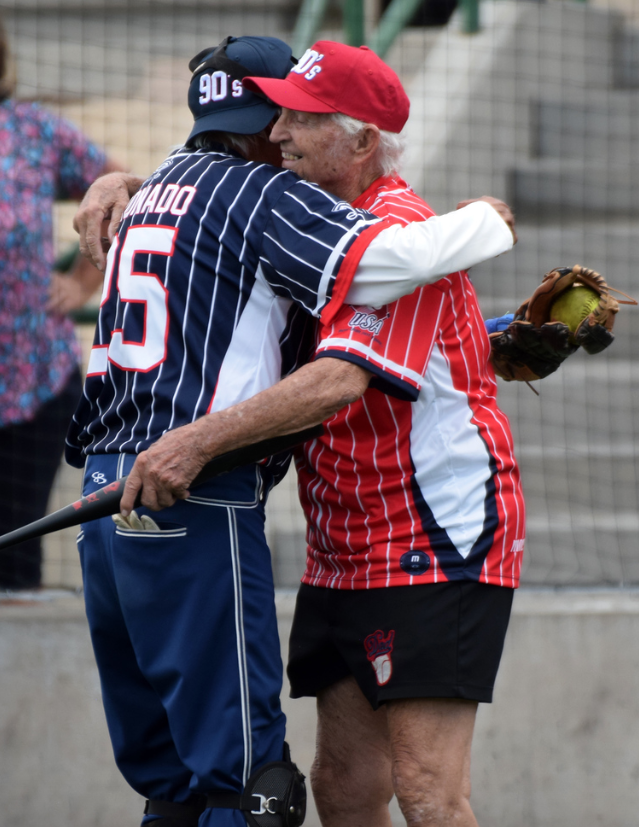
Camaraderie and friendship amongst the 90s players goes beyond the barrier of East vs. West.
“I am one lucky dude to be here and playing ball at my age,” Carroll Shook, 90, of Wenatchee, Wash., said shortly before the fifth-annual 90s game started at the Big League Dreams complex during the Senior Softball-USA World Championships. “It means a lot to me. It’s a special game.”
Shook played for the blue-clad West team while lead-off hitter Barnes played for the red-uniformed East team. Some 88- and 89-year-olds helped fill out the rosters, but 16 of the players turn 90 or older this year. The oldest two? Their birth year was 97 years ago, when Herbert Hoover occupied the White House.
Before the game, East player Roland Johnson of New Berlin, Wis., joked about writing his obituary.
“I am waiting to get there (heaven) to play with all the ballplayers waiting on me,” he said. “We are going to have a great team.”
During his game-opening at-bat, Barnes singled sharply to left field. The crowd roared.
In the field, 12 fielders reacted. Teams are allowed five outfielders and five infielders, plus a pitcher and catcher. The extra players help reduce gaps between fielders, who have played so long they have forgotten what it was like to be spry. If a ball rolls between outfielders, it soon becomes a ground-rule double.
Organizers set the outfield co-ed line as the home-run line. Any player who could launch a ball past the line earned a homer without needing to run the bases. The rules also allowed courtesy runners from home for players unable to reach first base on their own.
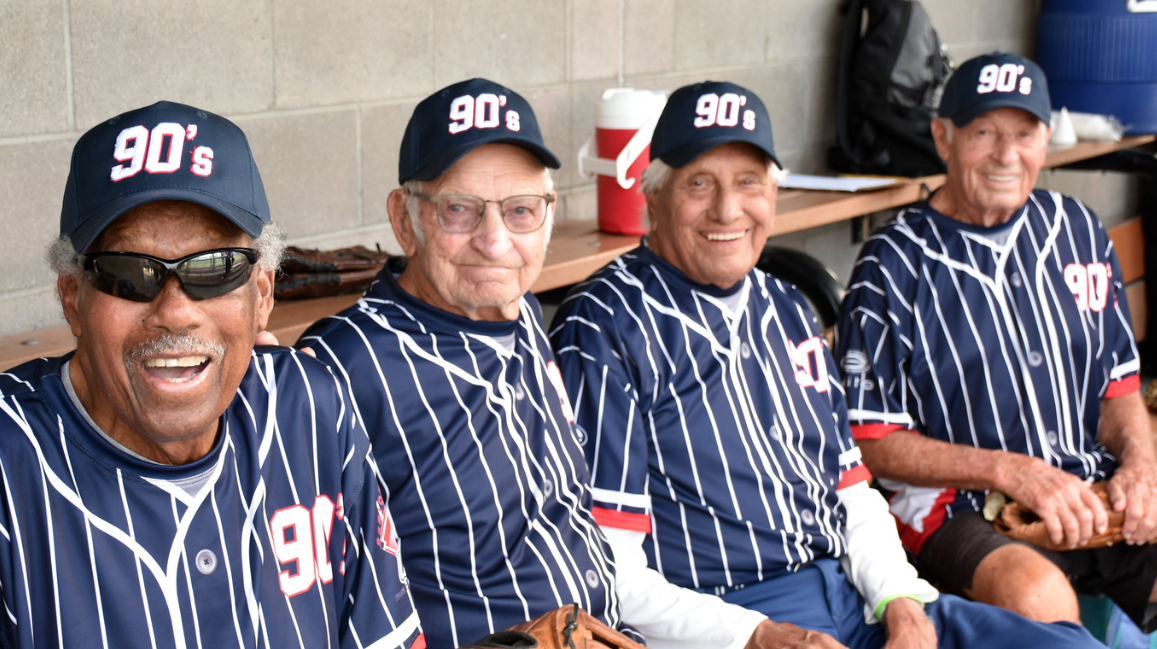
90s West players in the dugout, waiting for their next swing.
In the first inning, each team batted every player on the team. The East opened with three runs.
The West responded with fireworks. Single. Home run. Home run. Home run. Single. Single. Single. One out. Double. Two outs. And so on.
It looked like a team of Hank Aarons when it really was 88-year-old Billy Poe of California, 88-year-old Ronnie Guest of Arizona and 92-year-old Ray Newman of California hitting those bombs.
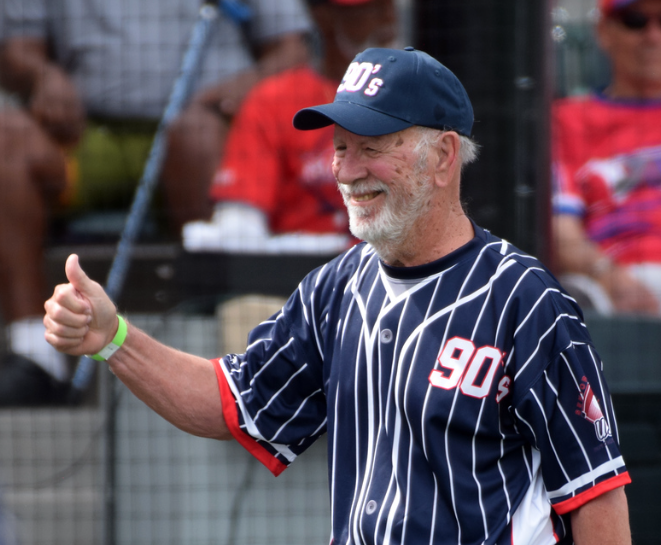
Ronnie Guest was also inducted into the National Senior Softball Hall of Fame this year.
Later in the game, the West turned an 8-4-3 double play.
“This should be mandatory attendance for all the lazy 50- and 60-year-olds out there,” a fan quipped from behind the home plate backstop.
After one inning, the West led 10-3. At game’s end, the score read 18-6.
That didn’t really matter.
“I thank the Lord that I can still do these things,” said the East team’s Roger Schroder, one of the 10 players who suited up for the small-town state champion Indiana basketball team featured in the movie, “Hoosiers.”
Guest called playing in the 90s game “a milestone.”
Relatives of some players agreed, such as the 15 or so people who came from out-of-state to cheer Ray Newman. All wore shirts with pictures of him playing while younger. Much younger.
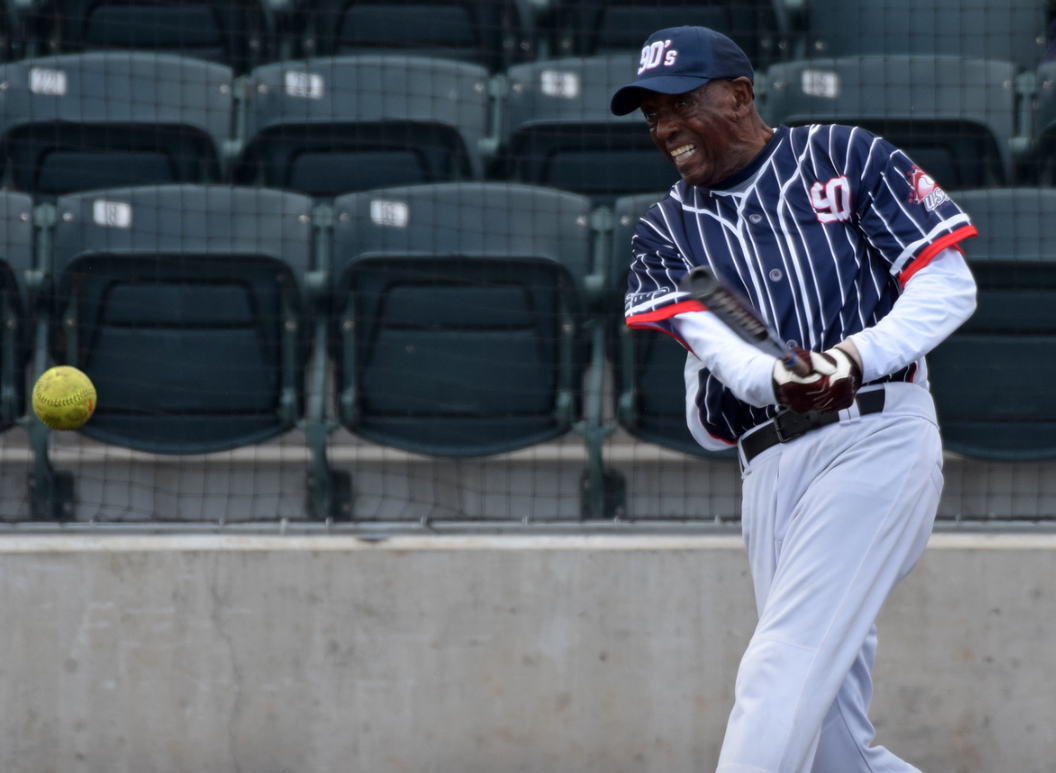
Ray Newman of California.
“It was wonderful to see all these guys out here,” said Clint Johnson of San Diego, one of Newman’s nephews.
In a post-game ceremony, each player received a medal. Managers named their most valuable players. And SSUSA awarded both teams the Steve Simmons Memorial Sportsmanship Award for being such trailblazers.
“They inspire players who are younger to continue to play,” said Terry Hennessy, Senior Softball USA’s chief executive officer. “Plus, a lot of these players were instrumental in growing the sport when they were young.”
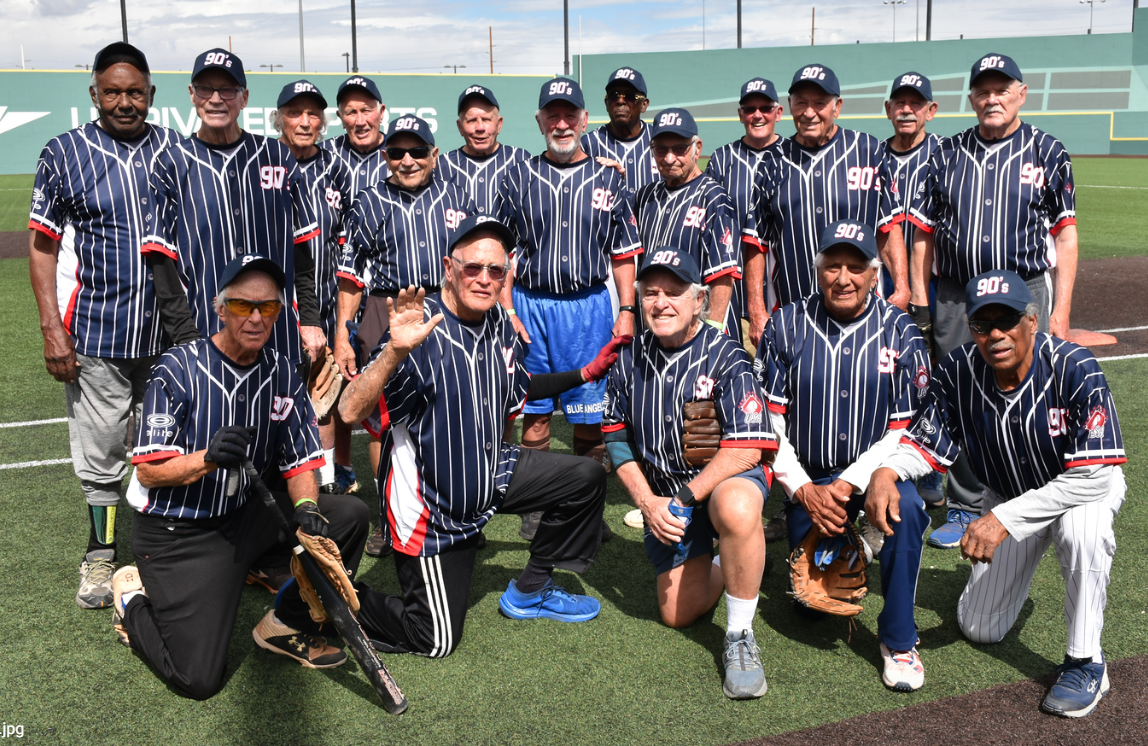
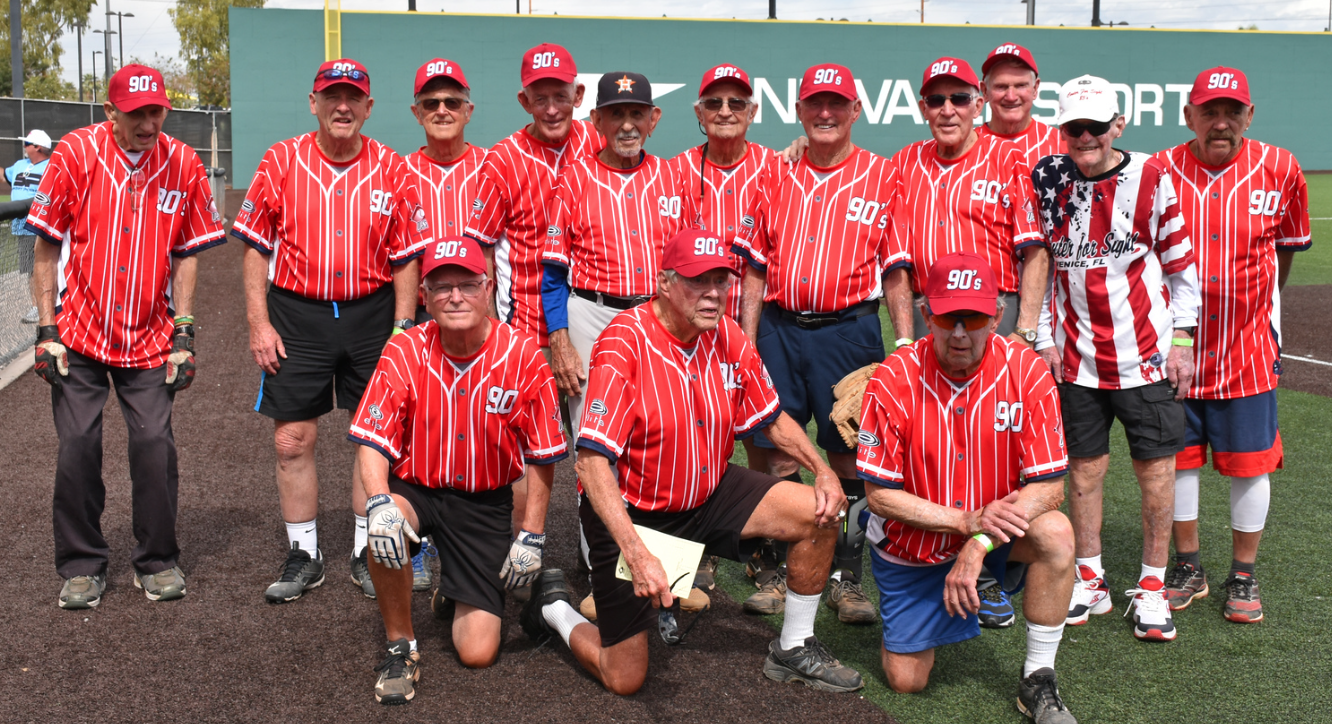
West 90s Team (left) and East 90s Team (right).
Senior Softball-USA
Email: info@SeniorSoftball.com
Phone: (916) 326-5303
Fax: (916) 326-5304
9823 Old Winery Place, Suite 12
Sacramento, CA 95827